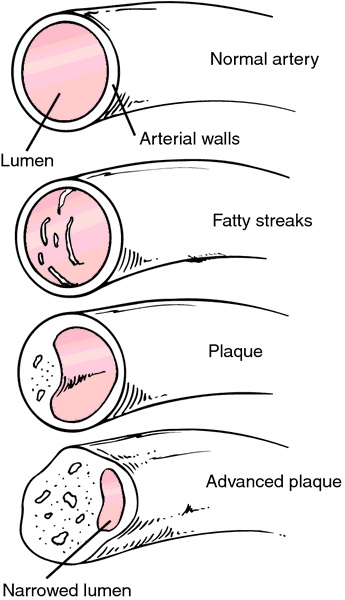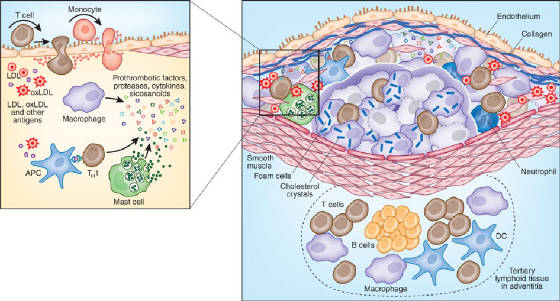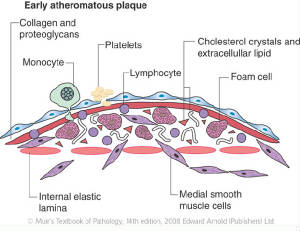
Arterial plaque is not simply a buildup of cholesterol. It is a complex, inflammatory lesion driven by oxidized LDL, macrophages, and smooth muscle cells — with fructose and oxidized polyunsaturated fats as the primary initiating factors.
The Composition of Plaque
Atherosclerotic plaque consists of:
- Oxidized LDL (not native LDL)
- Foam cells (macrophages engorged with oxidized LDL)
- Smooth muscle cells (migrated from the arterial media)
- Extracellular matrix (collagen, elastin)
- Calcium deposits (in advanced plaques)
- Inflammatory cells (T lymphocytes, mast cells)
The key word is "oxidized." Native LDL — unoxidized LDL — does not cause plaque. It is only when LDL becomes oxidized that it is taken up by macrophages and initiates plaque formation.
How Plaque Forms
- LDL oxidation: LDL particles containing polyunsaturated fatty acids (from industrial seed oils) become oxidized in the arterial wall
- Macrophage uptake: Oxidized LDL is recognized by scavenger receptors on macrophages and taken up
- Foam cell formation: Macrophages engorged with oxidized LDL become foam cells
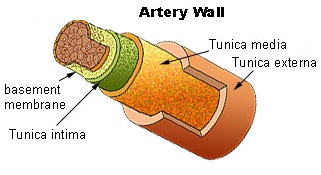
- Plaque initiation: Foam cells accumulate in the arterial intima, forming the fatty streak — the earliest stage of atherosclerosis
- Plaque progression: Smooth muscle cells migrate from the media, inflammatory cells accumulate, and the plaque grows
Plaque is not a cholesterol deposit. It is an inflammatory lesion driven by oxidized LDL. The primary cause of LDL oxidation is polyunsaturated fats from industrial seed oils.
Why Saturated Fat Is Not the Problem
Saturated fat does not oxidize easily — it is chemically stable. LDL particles rich in saturated fat are resistant to oxidation. LDL particles rich in polyunsaturated fat (from industrial seed oils) are highly susceptible to oxidation.
This is why replacing saturated fat with polyunsaturated fat — as recommended by dietary guidelines — may increase cardiovascular risk rather than reduce it.
The Fructose Connection
Fructose promotes plaque formation through multiple mechanisms:
- Raises small, dense LDL (more susceptible to oxidation)
- Causes glycation of LDL (glycated LDL is taken up by macrophages)
- Promotes inflammation (through uric acid and advanced glycation end-products)
- Causes insulin resistance (which promotes endothelial dysfunction)
Implications for Prevention
Preventing atherosclerosis requires:
- Eliminating industrial seed oils (the primary source of oxidizable PUFAs in LDL)
- Eliminating fructose (which promotes glycation, inflammation, and small dense LDL)
- Replacing with stable fats (butter, olive oil, coconut oil)
- Reducing inflammation through diet and lifestyle